

+918048039818

Currently it only shows your basic business info. Start adding relevant business details such as description, images and products or services to gain your customers attention by using Boost 360 android app / iOS App / web portal.

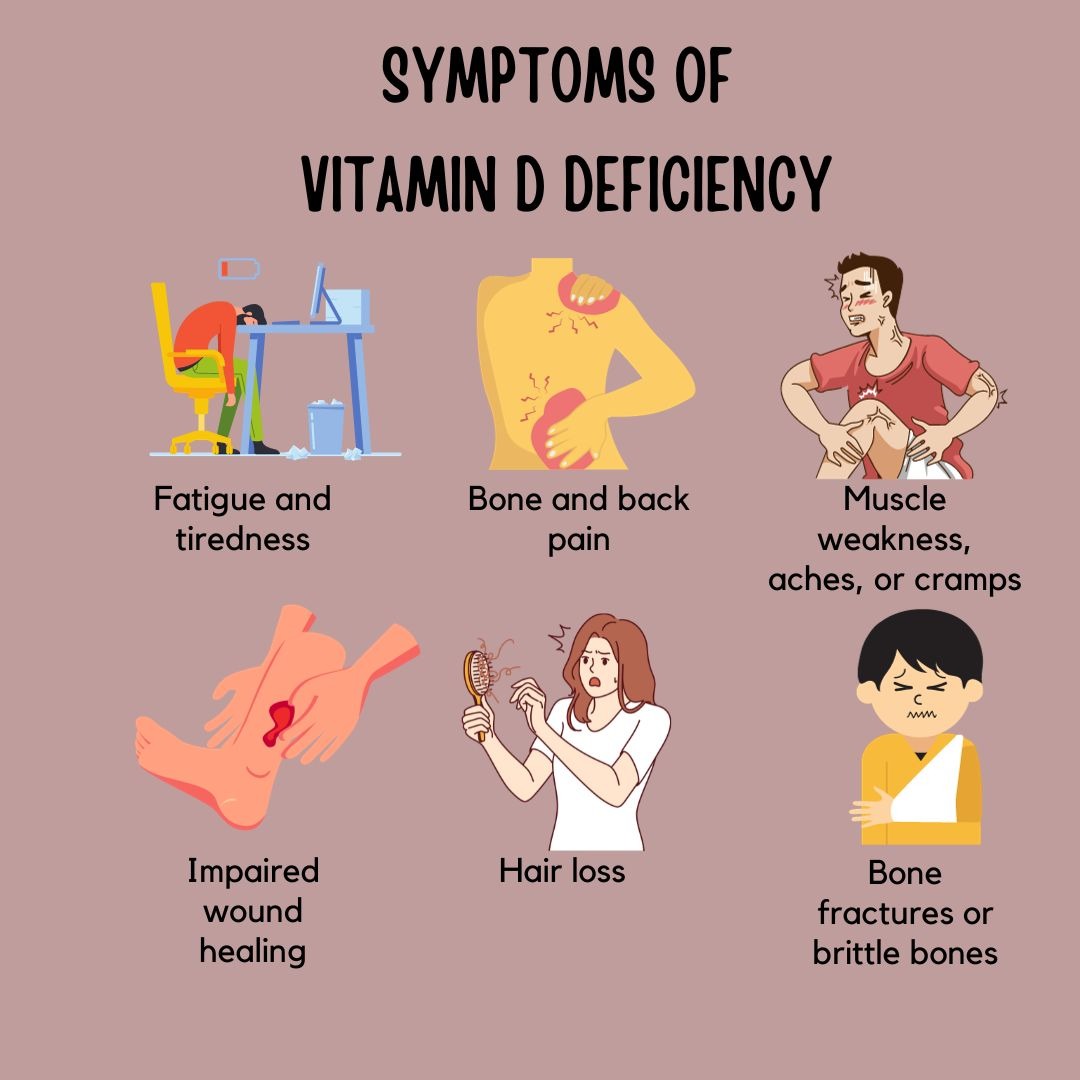
Vitamin D deficiency often has subtle or no initial symptoms, making it difficult to detect without a blood test. When symptoms do occur, they are typically related to impaired bone and muscle health. Common symptoms of vitamin D deficiency can include: Fatigue and Tiredness: A persistent feeling of exhaustion that does not improve with rest. Bone Pain: Aching or pain, particularly in the lower back, spine, pelvis, or legs. Muscle Weakness, Aches, or Cramps: Vitamin D is crucial for muscle function, and a deficiency can lead to reduced strength, pain, and loss of muscle tone. Mood Changes: There is a link between low vitamin D levels and a depressed mood, anxiety, or irritability. Frequent Illnesses: Vitamin D plays a key role in supporting the immune system, so a deficiency can make one more susceptible to infections. Slow Wound Healing: Impaired immune function and inflammation control can lead to injuries taking longer to heal. Hair Loss: Vitamin D is involved in the hair growth cycle, and low levels can contribute to hair loss. Bone Loss and Fractures: In adults, long-term deficiency can lead to osteomalacia (softening of the bones) or osteoporosis (brittle bones), increasing the risk of fractures from minor falls or impacts. Sleep Problems: Difficulty sleeping well has been linked to low levels of vitamin D. In children, a severe and prolonged deficiency can lead to a condition called rickets, which causes bone deformities such as bowed legs, soft skulls, and improper growth patterns. If you are experiencing any of these symptoms, you should consult us and may need to getting check your vitamin D levels. A simple blood test can confirm a deficiency, which can then be addressed through diet changes, increased sun exposure, or supplements, if necessary.


